Suitable inputs or applications
- Cattle dung
- Press mud
- Food and market waste
- Municipal organic waste
- Agro-industrial residues
- Distillery residues
- Selected energy crops subject to sustainability
- Mixed feedstock after compatibility testing
Evaluate compressed biogas projects from feedstock aggregation and digestion to gas upgrading, digestate use and commercial delivery.
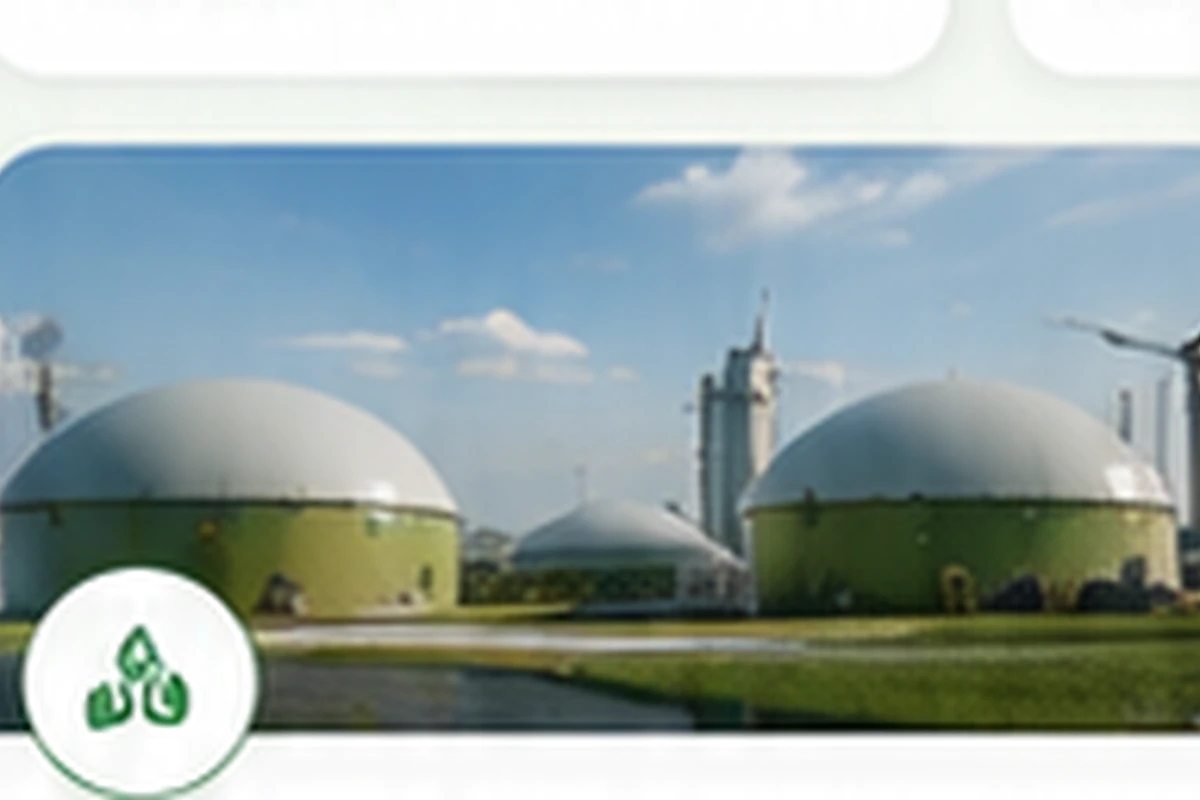
Compressed biogas is upgraded biogas produced from anaerobic digestion of suitable organic materials. A viable project requires consistent feedstock, stable biological operation, gas purification and reliable product offtake.
Actual outcomes depend on input quality, process configuration, operation, product quality and local conditions.
Convert suitable organic wastes and residues into useful gas and digestate products.
Produce upgraded gas that may substitute conventional gaseous fuels subject to quality requirements.
Capture and use methane that may otherwise be released from unmanaged decomposition.
Develop fertiliser or soil-input pathways where composition and regulations allow.
Support industries, farms and institutions with structured organic-waste processing.
Create aggregation, logistics and operating activity around local resources.
A project cannot be responsibly configured without the following information.
The final scope is defined after preliminary assessment and may involve specialist implementation partners.
Included when relevant to the agreed project-development mandate.
Included when relevant to the agreed project-development mandate.
Included when relevant to the agreed project-development mandate.
Included when relevant to the agreed project-development mandate.
Included when relevant to the agreed project-development mandate.
Included when relevant to the agreed project-development mandate.
Included when relevant to the agreed project-development mandate.
Included when relevant to the agreed project-development mandate.
Included when relevant to the agreed project-development mandate.
Included when relevant to the agreed project-development mandate.
Included when relevant to the agreed project-development mandate.
Included when relevant to the agreed project-development mandate.
Share technical and commercial information for preliminary review.